First major planting


We are pleased to share the plans for the first major tree-planting scheme at the land.
This first phase focuses on the field to the left of the Beryl Burton Cycleway as you approach from Knaresborough. The design has grown from a workshop with wood-meadow ecologist Dan Carne, whose work centres on creating landscapes that are productive, biodiverse and grounded in local character. The plan brings together four complementary habitats, each chosen for what it can contribute to the wider landscape.

Hazel coppice at the Knaresborough (east) end
Hazel is a traditional, low-growing woodland species that has been used across Britain for centuries. Planting a hazel coppice here has several benefits.
It protects the cherished view of Knaresborough Castle as the shrubs remain well below tree height.
Once established, the hazel can be cut on rotation, supplying straight, useful rods for craft, construction and community workshops.
Coppice cycles create a varied structure of young and mature stems, which is excellent for wildlife.
Hazel can be planted nearer to the underground gas pipeline than taller tree species, making the best use of the space.
Riparian trees strengthening the ghyll (southern edge)
The ghyll is already one of the richest ecological features on the land. Adding riparian trees such as alder, willow and bird cherry helps stitch and strengthen the habitat.
Their roots stabilise the banks and reduce erosion.
They cast dappled shade, regulating temperature in the channel below.
They offer food, shelter and nesting opportunities for birds, insects and amphibians.
Where the ghyll is thinner, this planting will help build a more continuous corridor for wildlife across the landscape.
Wood meadow planting extending into the field
Wood meadows are rare in the UK but incredibly valuable. They combine open meadow with widely spaced trees, creating layers of light and structure.
This mix is exceptionally good for pollinators, birds and invertebrates.
The open canopy allows meadow flowers to thrive beneath the trees.
It creates a softer transition from field to woodland, making the space feel more natural and varied.
Over time, this will become one of the most vibrant and alive parts of the field.
Mixed native hedge and low fence along the cycleway
Hedges have always been one of Britain’s most important wildlife habitats. Introducing a mixed native hedge here will:
Act as a gentle barrier to stop dogs running into the field
Provide berries, blossom and dense cover for birds
Add character to the cycleway edge and strengthen the sense of arrival into the wider landscape
This scheme is funded by the White Rose Forest’s Trees for Climate programme, the same initiative that supported woodland creation at Long Lands Common. Gabriel Holmes at WRF has prepared the detailed planting plan, and all necessary approvals have been secured from Northern Gas Pipelines, NYC’s ecology and archaeology teams. The proposals meet the UK Forestry Standard and do not require an Environmental Impact Assessment. A public notice has been displayed on the cycleway for several weeks.
White Rose Forest Proposals Current Google Earth Shot
Trees will be supplied by Thorpe Trees at Thorpe Underwood to keep sourcing as local as possible. All guards will be biodegradable, and planting may be mulched with composted hay from the site to help retain moisture and suppress weeds.
Planting will take place with volunteers in February. If you would like to be involved, we would love your help.
We also welcome feedback at admin@knaresboroughforestpark.org. While major changes are difficult at this stage, we are very keen to involve more people in shaping future planting and habitat work across the land. If that interests you, please do get in touch.
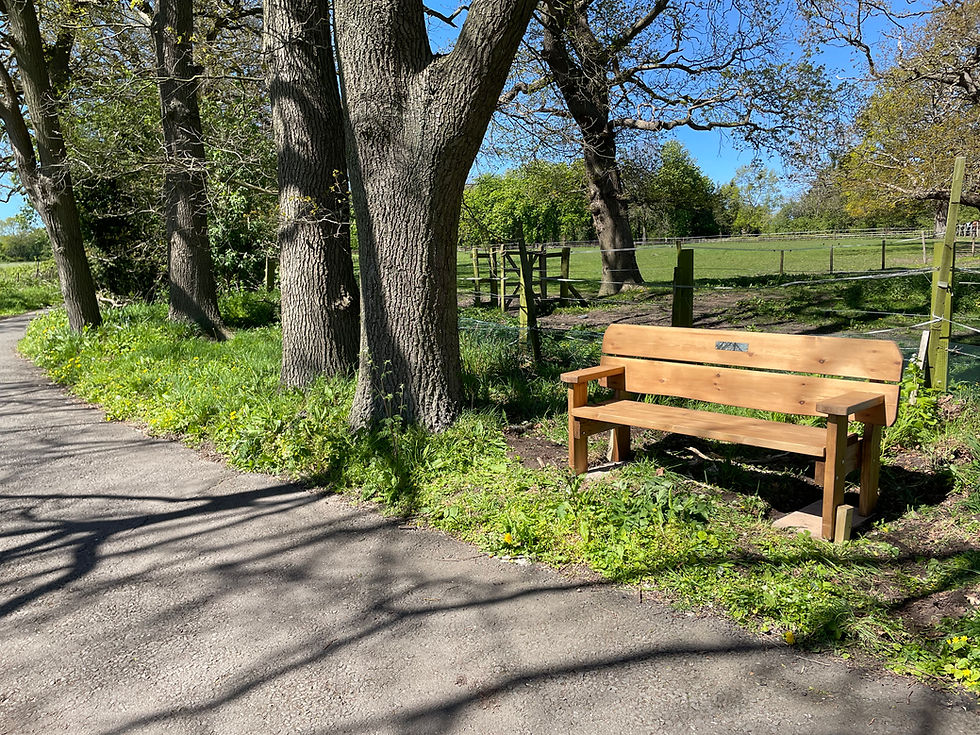
The rest of the field will continue to be managed for hay. A small viewpoint spot will be created in the north-west corner with access directly from the cycleway, offering a place to pause and enjoy the view.



Comments